
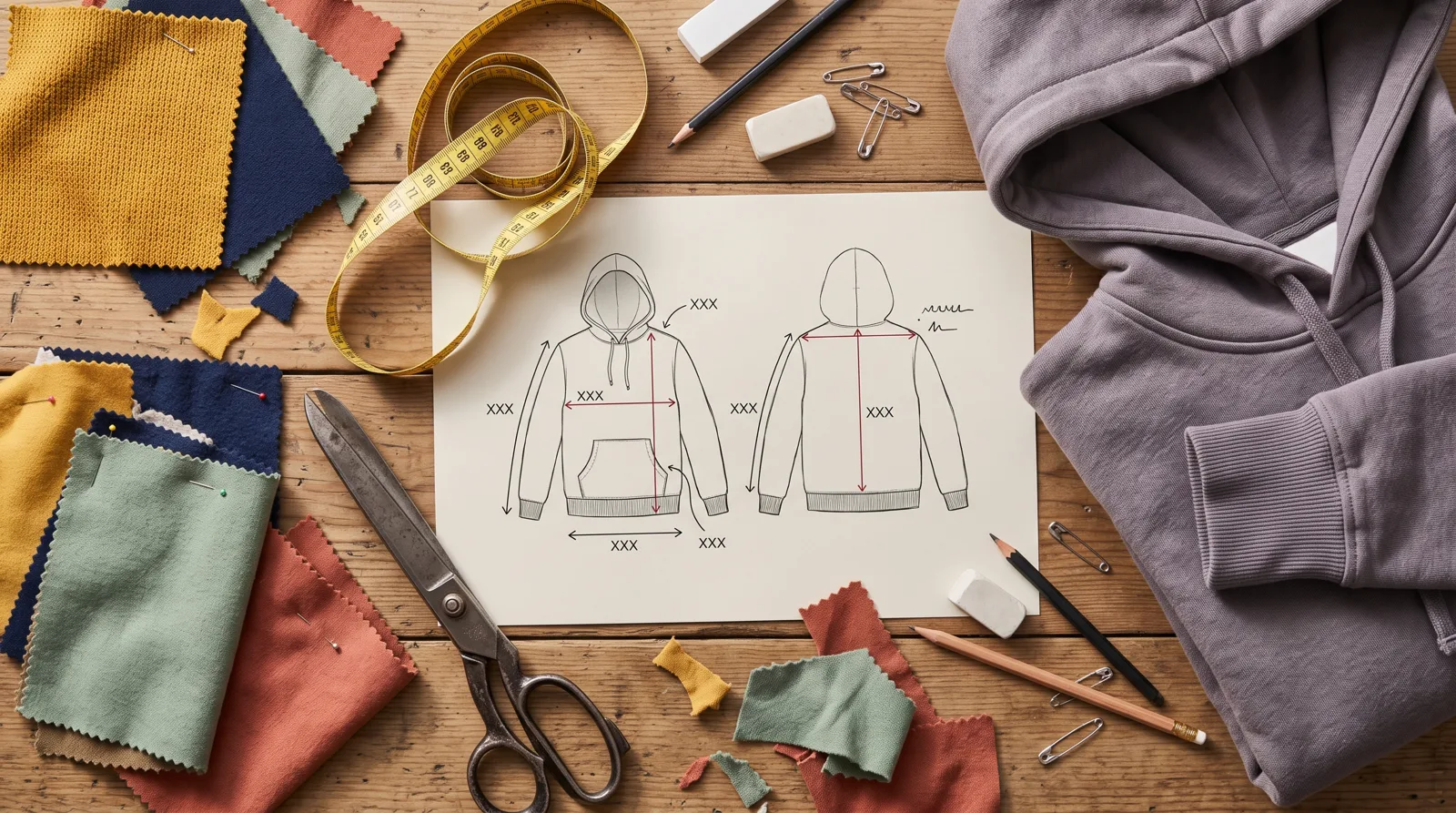
A tech pack is the blueprint for your garment
A tech pack — short for technical package — is the document that tells a manufacturer exactly what to make. It holds the drawings, measurements, materials and construction details of one garment, in enough detail that a competent factory can produce that garment without ever having seen your original sample, your mood board or your mind.
Think of it the way an architect's drawings relate to a house. Without drawings, every builder interprets "a nice three-bedroom house" differently and you cannot compare their quotes, because they are not pricing the same building. Clothing is identical. Two factories quoting from a photograph are quoting two different garments they have each imagined. Two factories quoting from the same tech pack are quoting your garment — and their prices, timelines and questions become directly comparable. That is why every serious conversation with a manufacturer, including ours, starts with one.
What goes inside a tech pack
A complete tech pack has six working parts. First, technical flats or clear photographs of the garment, front and back, showing every panel, seam, pocket and detail. Second, a bill of materials: the fabric (composition, weight in GSM, colour), plus every trim — zips, buttons, drawcords and their tips, ribbing, thread and interlinings. "Cotton hoodie" is not a material specification; "80% cotton, 20% polyester fleece, 400 GSM, brushed inside" is.
Third, a measurement table: the key points of measure — chest, length, sleeve, shoulder and so on — for every size you will sell, with tolerances stating how much variation is acceptable, and grading rules for how measurements step between sizes. Fourth, construction notes: stitch types, seam allowances, hem finishes, and details like bartacks or reinforced elbows that a drawing cannot fully show. Fifth, artwork: your print or embroidery files with exact sizes, placements measured from fixed points on the garment, and colour references such as Pantone codes. Sixth, labels and packaging: which labels go where, and how each finished piece is folded, tagged and bagged.
What happens when you skip it
The failure pattern is predictable. The sample comes back close to what you pictured but not the same — the fit drifts, the print sits lower and smaller than you imagined, the fabric feels lighter than the garment you loved — because every unspecified detail was decided by someone guessing on your behalf. You correct by message, the factory re-samples, and weeks pass. Worse, when bulk production follows an approved-by-photo sample with no written spec behind it, there is no shared reference to judge the shipment against, and disagreements about what was agreed become unresolvable.
None of this requires a careless factory. It only requires an incomplete brief. As we note in our rundown of mistakes to avoid before apparel production, asking for a quote without a complete brief is the first and most common one. The tech pack is the fix, written down before any money moves.
The most common tech pack mistakes
The errors we see most often are small omissions with large consequences. Measurements given for one size only, with no grading, leave the factory to invent your size run. Missing tolerances turn every measurement into an argument. Artwork supplied as a loose image — no width, no placement measured from the neckline or hem — guarantees the print lands where nobody intended. Fabric described by name instead of specification invites substitution. Colours given as names ("forest green") rather than references drift between dye batches and screens.
The other classic is assembling the tech pack from a retail garment's marketing photos instead of from the garment itself. Photos hide construction. If you are working from a reference piece, measure it, photograph its details inside and out, and note its fabric behaviour after washing. Your tech pack should describe the garment you have inspected, not the one in the lookbook.
How detailed does yours need to be?
As detailed as your garment is complicated — no more, no less. A single-colour printed tee can be honestly specified on a page or two: blank specification, size measurements, artwork size and placement, label details. A cut-and-sew jacket with panels, lining, hardware and embroidery needs the full treatment, because there are fifty decisions in it and every undecided one will be decided without you.
The minimum viable tech pack, for any garment, covers five things: what it looks like, what it is made of, what it measures in every size, where the artwork goes, and how it is labelled and packed. If your document answers those five, a good factory can sample from it — and the sampling conversation will quickly show you anything that is still unclear, while changes are still cheap. That feedback loop is exactly how production runs on our manufacturing floor, and it works the same at any decent factory.
Build yours with the free tech pack maker
You do not need design software or a technical designer to produce a workable tech pack. Our free tech pack maker walks you through the sections in order — garment details, materials, measurements, artwork, labels and packaging — and produces a clean PDF you can download and send with any enquiry, to us or to any other manufacturer you are comparing.
Bring a reference garment and a tape measure, and allow yourself an unhurried hour. The questions the maker asks are the questions a factory would ask you anyway; answering them once, in writing, is the difference between a quote you can trust and a sample you have to fix. When it is ready, send it with your quote request and we will cost your garment against it precisely.
Frequently asked questions
Can I make a tech pack without design experience?
Yes. Start from a reference garment you can measure, work through a template section by section, and be specific rather than artistic. A clear, plain tech pack beats a beautiful vague one every time — or use our free tech pack maker, which asks you the right questions in order.
What format should I send a tech pack in?
PDF is the standard: it opens anywhere and prints true. Send print and embroidery artwork alongside it as separate vector files (AI, EPS or PDF) with sizes noted, rather than embedding low-resolution images in the document.
Do I need a tech pack for a simple printed t-shirt?
A basic one, yes. Even a simple tee has a fabric weight, a fit, sizes, and artwork with a size and a position. A one-page spec covering those points prevents most of the misunderstandings that ruin first orders.
Who owns my tech pack?
You do. It is your design document, and you can take it to any manufacturer. A factory may develop patterns from it for your production, but the design and specification remain your brand's property.
Ready when you are
Awexa International manufactures custom streetwear, sportswear and private label clothing in Sialkot from 30 pieces, with samples in about a week and embroidery, DTG, DTF and screen printing in-house. Build your tech pack, then request a quote — or talk it through first on WhatsApp at +92 300 4715677 or by email at info@awexaintl.com.