
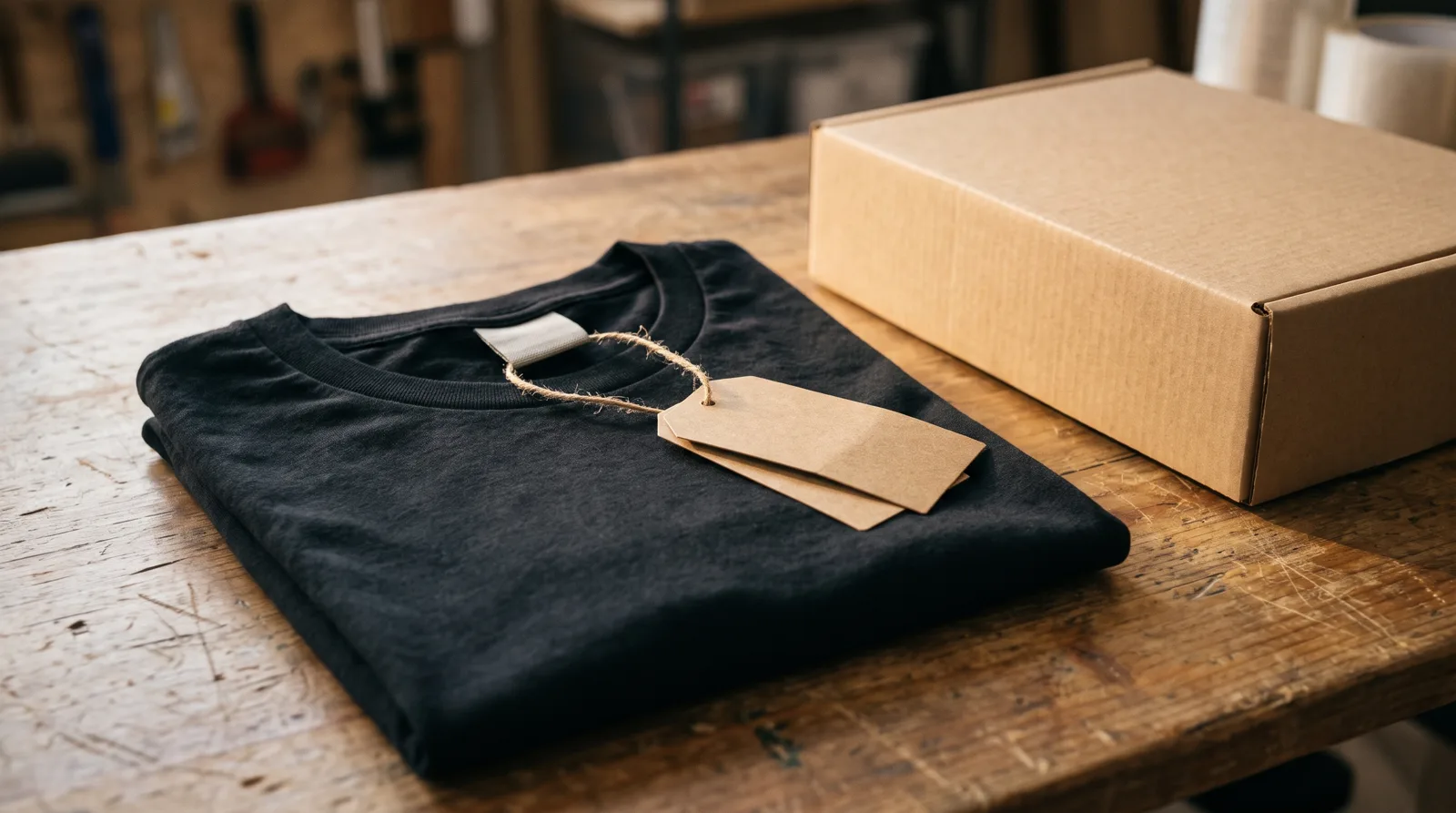
What private label actually means
Private label clothing is produced to your specification and sold under your brand. The fit, the fabric, the construction and the finishing are your decisions; the labels, tags and packaging carry your name. It is the model behind most independent streetwear and sportswear labels: the brand owns the product design and the customer relationship, and a manufacturing partner owns the machines and the making.
It helps to separate it from two neighbours it is often confused with. Relabelling blanks means buying finished stock garments and swapping the neck label — fast, but the fit and fabric were never yours and every competitor can buy the same garment. White label means putting your label on a factory's existing design. Private label sits above both: more work at the start, but the product that arrives is one only your brand sells.
Step 1: Start with the product, not the logo
New founders often start with branding and arrive at the garment later. Reverse it. Decide the hero product of your first range, the fabric it should be made from, the fit it should have, the sizes and colours it will come in, and the price it needs to sell at. Buy or borrow reference garments that fit the way you want, and measure them. A tight first range — two or three styles done properly — launches better than eight styles done thinly, and it keeps your first production run achievable at a sensible quantity.
Working backwards from your target retail price also disciplines every later decision: fabric weight, decoration method and packaging all have cost consequences, and it is far cheaper to make those trade-offs on paper than at the sample stage.
Step 2: Turn the idea into a tech pack
Your tech pack is the document a factory actually builds from: technical drawings or clear photos, a bill of materials covering fabric and every trim, measurements for every size, construction notes, and artwork with sizes and placements for prints or embroidery. It is also the document that makes quotes comparable between factories, and the reference you both check the finished goods against.
If you have never written one, start with our explainer on what a tech pack is and why your manufacturer needs one, then build yours in the free tech pack maker — it walks you through each section and produces a PDF you can send with your enquiry.
Step 3: Sampling and fit approval
With the tech pack sent, the factory produces a first sample. At Awexa, samples are typically ready within a week of a complete brief. Your job at this stage is forensic: try the garment on a real body, measure it against the spec, check stitching, fabric hand-feel, print or embroidery quality, and wash it. Write down every correction in measurements, not impressions, and expect at least one revision round before a pre-production sample — the exact garment bulk will copy — is approved.
Never approve bulk from photographs of a sample. The approved physical sample, kept on your shelf, is the standard the shipment is judged against, and it settles most disputes before they start.
Step 4: Labels, tags and packaging
This is where a garment becomes your brand, and it runs on its own clock. The core pieces are a woven or printed main label with your brand name, size labels, and a care label carrying the legally required information — fibre content, country of origin and care instructions for the US; fibre and care information for the UK and EU. Hang tags carry your branding, price and story, and packaging — usually printed or plain polybags for e-commerce, boxes for retail — protects the garment and completes the unboxing.
Two practical points. First, trims have their own minimums and lead times, and woven labels in particular should be ordered in parallel with sampling, not after bulk approval, so they never hold up production. Second, decide your label artwork early and keep it consistent across the range: the label set is a small cost per garment and one of the most visible differences between a private label product and a relabelled blank.
Step 5: Bulk production and quality control
Once the pre-production sample is approved and trims are in hand, bulk production follows the process on our manufacturing page: fabric inspection, cutting, sewing, decoration, finishing, pressing and packing to your specification. Agree in advance how quality will be verified — measurement checks against the spec, an inspection standard for defects, and photo or video updates at agreed milestones — and who authorises the shipment to leave. Goods should be packed the way you will sell them: folded, tagged, bagged and cartoned by size and colour, so stock goes straight onto your shelf or fulfilment pile.
A realistic launch timeline
Put honest durations on each stage and the launch date takes care of itself. Building a tech pack takes days if your product decisions are made. Sampling runs about a week per round at the factory, plus courier time in both directions and your own review time — most brands should allow several weeks for sampling overall. Labels and tags are produced alongside sampling. Bulk production then depends on quantity and complexity, and freight closes the journey: air in days at a higher cost, sea in weeks at a lower one.
Added up, a first private label launch is normally a matter of a few months from brief to stock, not a few weeks. Anyone who promises you a full custom range, labelled and packed, in days is describing a product that is not custom. The brands that launch on schedule are the ones that started sampling while everyone else was still choosing a logo.
Frequently asked questions
What is the difference between private label and white label clothing?
With private label, the garment is produced to your specification — your fit, fabric, construction and branding. With white label, you put your label on a factory's existing design. Private label costs more effort up front but produces a product that is genuinely yours.
What legally has to be on a clothing label in the US?
At minimum: the fibre content, the country of origin, care instructions, and the manufacturer's identification (an RN number or your company name). The UK and EU require fibre content, care information and origin marking as well. Your manufacturer can sew in compliant labels, but the information is your responsibility as the brand.
How many sample rounds should I plan for?
Plan for at least two: an initial sample to correct fit and construction, and a pre-production sample made exactly as bulk will be made. Simple garments sometimes settle in one round; new fits and fabrics often take three. Each round adds shipping and review time, so build it into your launch date.
Can I launch a private label brand with a small quantity?
Yes. Private label is about who controls the specification and branding, not about volume. Production from 30 pieces per style lets you launch a tight first range, learn from real sales, and scale the styles that work.
Launch yours
Awexa International has made private label apparel in Sialkot since 2000 — custom streetwear, sportswear and teamwear from 30 pieces, with embroidery, DTG, DTF and screen printing in-house, and your labels, tags and packaging finished before dispatch. Send us your tech pack or your product idea through the quote request page, or start the conversation on WhatsApp at +92 300 4715677.